
1611 – Pharmacology

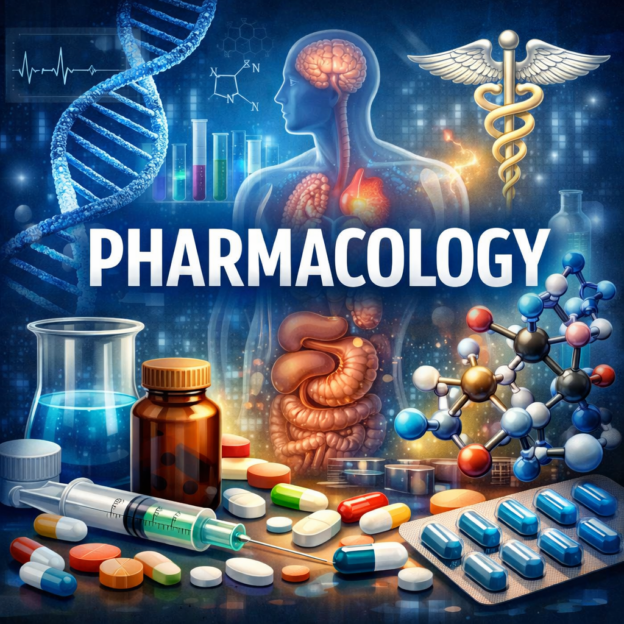
About Course
- Pharmacology is the scientific study of drugs and their interactions with living systems. This course provides a comprehensive understanding of the sources, properties, mechanisms of action, therapeutic uses, adverse effects, and safe administration of drugs used in clinical practice.
- The course introduces the basic principles of pharmacokinetics and pharmacodynamics, including drug absorption, distribution, metabolism, and excretion, as well as the factors influencing drug action. Students will learn how drugs interact with receptors and produce physiological and therapeutic effects.
- It also covers the classification of drugs affecting different body systems, such as the cardiovascular system, nervous system, endocrine system, and antimicrobial agents. Emphasis is placed on the rational use of medicines, dosage calculations, drug interactions, adverse drug reactions, and patient safety.
- The course prepares students to develop critical thinking in drug therapy, enabling them to understand appropriate drug selection, monitor therapeutic outcomes, and recognize potential complications.
- By the end of the course, students will be able to apply pharmacological knowledge in clinical settings, ensuring the safe, effective, and evidence-based use of medications in patient care.
Course Content
Syllabus
Lecture Notes
Unit – I
Unit – II
Puzzles
Unit – I
Unit – II
Unit – III
Unit – IV
Unit – V
Resource Links
Unit – I
Unit – II
Unit – III
Unit – IV
Unit – V
Assignment
YouTube Videos
Unit – I
Unit – II
Unit – III
Unit – IV
Unit – V
Questions Bank
Student Ratings & Reviews

No Review Yet