
Grade 4 Social Science

By KARUNAMBIGAI
Categories: Grade 4
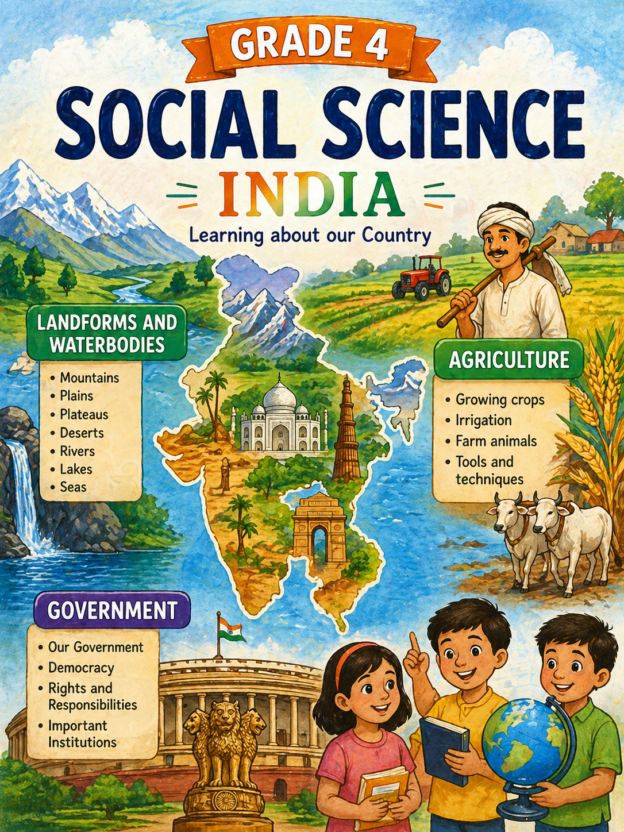
About Course
Physical Divisions of India
India is divided into different physical regions based on landforms:
- Himalayan Mountains – High and snowy mountains in the north
- Northern Plains – Fertile land suitable for farming
- Plateau Region – Rocky and rich in minerals
- Desert Region – Dry and sandy (Thar Desert)
- Coastal Plains – Areas near the sea
- Islands – Groups of islands in the Arabian Sea and Bay of Bengal
Each region has its own climate, plants, animals, and lifestyle.
2. Calendar
A calendar helps us keep track of days, weeks, months, and years.
- A year has 12 months
- It is based on the movement of the Earth around the Sun
- We use calendars to plan events, festivals, and daily activities
Different cultures may have different types of calendars.
3. I Make History
History is not just about the past—we create history every day through our actions.
- Important events become part of history
- People who do great things are remembered
- Even small good actions can make a difference
This topic encourages students to be responsible and do meaningful things.
4. Movements of the Earth
The Earth moves in two main ways:
- Rotation – The Earth spins on its axis
→ Causes day and night - Revolution – The Earth moves around the Sun
→ Causes seasons
These movements help us understand time, climate, and life on Earth.
5. Land of Diversity
India is called a land of diversity because:
- People speak many languages
- Follow different religions
- Wear different clothes
- Celebrate many festivals
Even though we are different, we live together peacefully. This is called unity in diversity. -
By the end of Grade 4, students:
- Become more aware of their surroundings and country
- Develop basic geographical and historical understanding
- Learn to respect diversity and work together
- Begin to think as responsible and informed young learners
Course Content
Annual Plan
Powerpoint presentation
Puzzle
Assignment
Activities photos
You tube Videos
Resources link
Worksheet
Question Bank
Class work notes
Student Ratings & Reviews

No Review Yet