
23ITT304 Information Coding Technique (Class A)

About Course
-
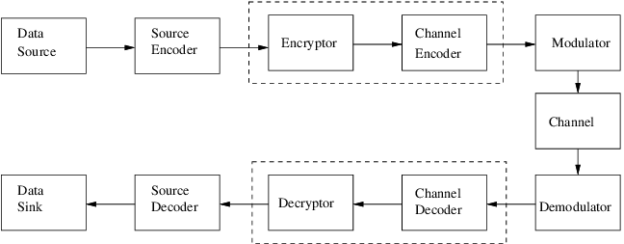
Source Coding: Compresses data by removing redundancy to save storage space (e.g., Huffman or JPEG).
-
Channel Coding: Adds extra bits to detect and fix errors caused by noise during transmission (e.g., Hamming Code).
-
Line Coding: Converts bits into electrical or optical signals for physical cables (e.g., Manchester encoding).
-
Encryption: Scrambles data into an unreadable format to ensure privacy and security (e.g., AES or RSA).
-
Modulation: Maps digital data onto analog carrier waves for wireless communication like Wi-Fi or Radio.
-
Decoding: The reverse process at the receiver that restores the signal back into human-readable information.
Course Content
Student Ratings & Reviews

No Review Yet