
Exercise Files
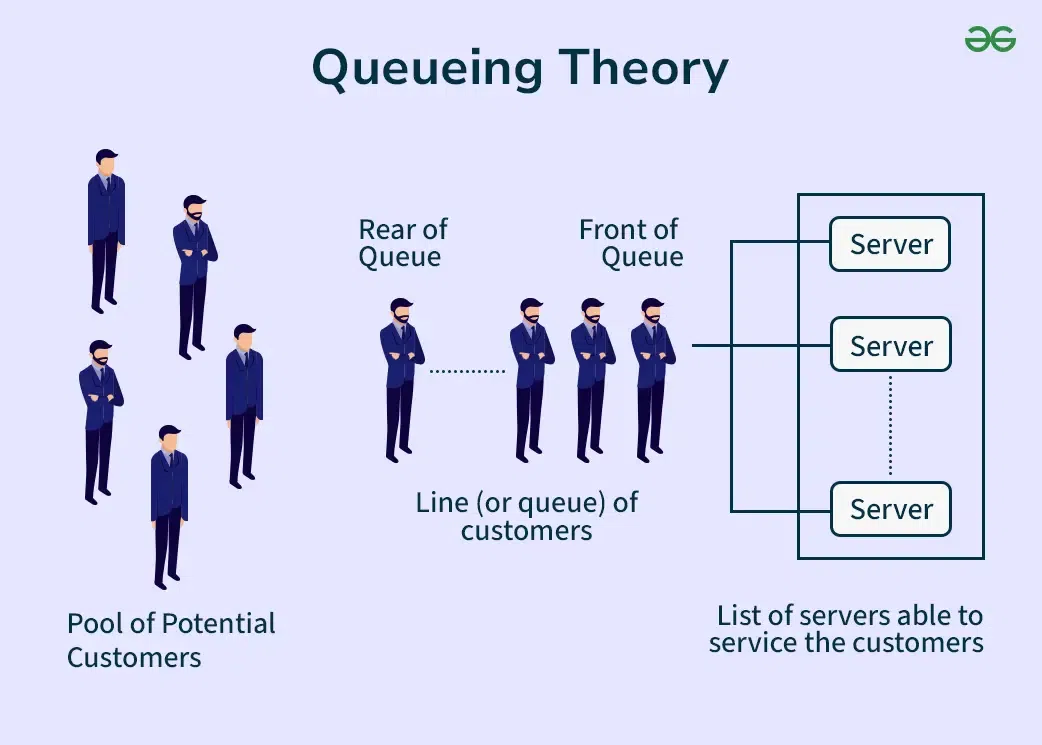
Queuing Theory is the mathematical study of waiting lines (queues). It helps analyze systems where customers (people, data, jobs) arrive, wait for service, and then leaveൔso we can reduce waiting time and improve efficiency.
I
There was a problem reporting this post.
Please confirm you want to block this member.
You will no longer be able to:
Please note: This action will also remove this member from your connections and send a report to the site admin. Please allow a few minutes for this process to complete.
WhatsApp us